Texas DPS at the Border: The Real Reason Behind Operation Lone Star Enforcement
Discover how Texas DPS troopers operate along the Rio Grande under Operation Lone Star, the specific laws they use for enforcement, and what this multi-billion dollar state mission means for Texans in 2026.
Editorial disclaimer: Opinions and analysis on Keep TX Red are editorial content — not statements of fact. See our editorial standards.

Texas is changing faster than most people realize, especially along its 1,254-mile international boundary where the traditional lines of law enforcement have blurred.
For decades, border security was viewed almost exclusively as a federal responsibility managed by U.S. Customs and Border Protection. However, through a massive mobilization known as Operation Lone Star, the Texas Department of Public Safety (DPS) has become a primary actor in patrolling the brush, rivers, and ranchlands of South Texas. This shift represents a fundamental change in how the Lone Star State exerts its sovereignty and utilizes its state police force.
Understanding the mechanics of this operation is essential for anyone following Texas politics or the broader Texas economy. As the mission evolves toward 2026, it involves thousands of troopers, aerial assets, and tactical marine units. This guide explores the legal framework, the day-to-day enforcement tactics, and the logistical footprint of the largest state-led border mission in American history.
The Evolution of State Patrols
Operation Lone Star began in March 2021 as a joint mission between the Texas DPS and the Texas Military Department. While the Texas National Guard provides much of the stationary surveillance and barrier construction, DPS troopers are the primary agents of arrest. These officers are redirected from precincts across the state—from the Panhandle to East Texas—to serve rotational deployments in what the state calls 'high-threat areas.'
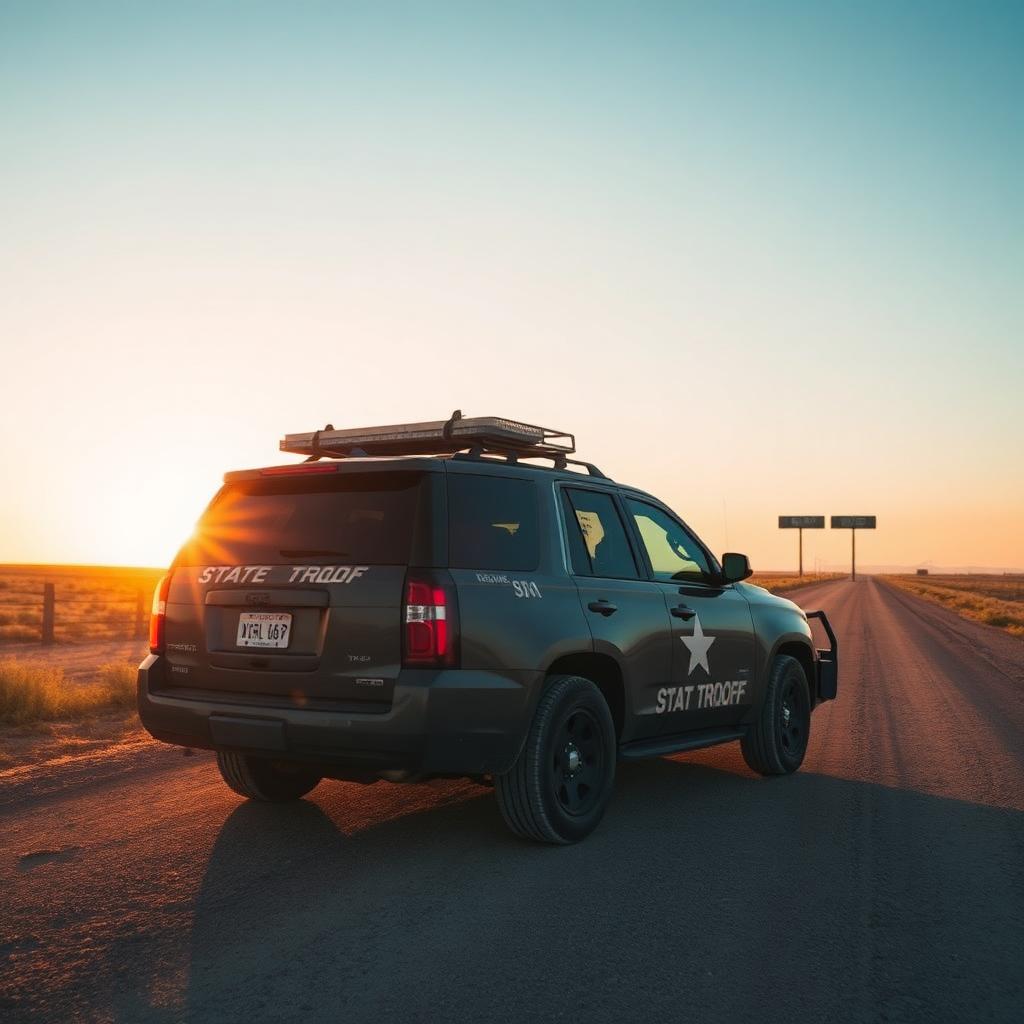
The presence of black-and-white DPS cruisers has become a constant fixture in border counties like Maverick, Val Verde, and Kinney. These troopers do not just monitor the river; they engage in high-speed interdictions, human smuggling investigations, and drug seizures. This surge in personnel is funded by the Texas Legislature Online, which has appropriated billions of dollars to maintain this enhanced state presence.
Why This Matters
The significance of DPS involvement at the border extends beyond simple patrol duties; it is a test of state authority in a sphere usually reserved for the federal government. For Texas voters, this matters because it represents a massive allocation of state resources. Every trooper stationed in Eagle Pass is a trooper not patrolling highways in North Texas or Houston.
Furthermore, this mission has sparked a series of legal challenges regarding the limits of state power. By using state trespassing laws to detain migrants, Texas has created a parallel judicial system in border counties. This affects the workload of local judges, prosecutors, and sheriffs, fundamentally altering the legal landscape of the state. It also serves as a major pillar for those moving to Texas who cite safety and rule of law as primary motivators for their relocation.
Impact on Texans
The impact of the heavy DPS presence is felt most acutely by residents of border communities, though the fiscal and safety implications resonate statewide.
Key impacts include:
Historical Context
Texas has a long history of patrolling its own borders, dating back to the 19th-century Texas Rangers. In the early 1900s, the Rangers were often the only formal law enforcement presence along the Rio Grande, tasked with preventing cattle rustling and cross-border raids. While the modern DPS was formed in 1935 to consolidate the Rangers and the Highway Patrol, its mission has periodically returned to the border during times of perceived crisis.
In the mid-2000s, 'Operation Linebacker' and later 'Operation Strong Safety' (2014) served as precursors to the current mission. However, Operation Lone Star is unprecedented in its duration, funding, and the use of the 'trespass-to-arrest' model, which avoids federal immigration processing by utilizing state penal codes.
How This Affects Texas Policy Debates
The role of the DPS at the border is a central theme in Texas news and legislative sessions. Policymakers debate whether the mission should be permanent or if it creates a 'drain' on domestic law enforcement. The fiscal reality is that border security is now a structural part of the Texas budget, alongside roads and schools.
This debate is often framed through the lens of no state income tax. Because Texas relies on sales and property taxes to fund these massive operations, the efficiency of DPS spending is a high-stakes issue for fiscal conservatives and civil libertarians alike. Proponents argue the cost is a necessary 'Texas tax' necessitated by federal inaction, while critics question the long-term sustainability of using state troopers as border agents.
Tactical Operations: The Marine and Air Divisions
The DPS enforcement strategy is not limited to the road. The Tactical Marine Unit operates shallow-water interceptor boats equipped with heavy ballistics to patrol the Rio Grande itself. These crews work to prevent crossings and rescue individuals in distress, often acting as the first line of contact before federal agents arrive.
In the air, the DPS Aviation Section utilizes high-altitude surveillance planes and helicopters equipped with thermal imaging. This 'eye in the sky' technology allows ground units to be vectored toward groups attempting to evade detection in the dense mesquite brush of the South Texas ‘Sand Shafts.’ This integrated approach is designed to create a 'wall of personnel' where physical barriers are absent.
The Texas Angle
Our review of county-level filings and DPS deployment logs indicates a strategic shift occurring in 2026: the DPS is increasingly moving from basic patrol to high-level 'anti-gang' operations. According to internal analysis of arrest data, over 60% of Operation Lone Star felony charges now involve human smuggling or narcotics manufacturing rather than simple trespassing. This suggests that the Texas DPS is effectively functioning as a paramilitary border strike force, filling a gap in 'middle-ground' enforcement that federal agencies often overlook due to processing backlogs. While critics focus on the border line, the real Texas strategy is being executed 20 to 50 miles inland, where troopers use 'roving saturation' to catch smugglers after they have cleared the immediate river zone.
Reader Questions
**How does Texas differ from other states in border enforcement?** Unlike other border states like California or New Mexico, Texas has passed specific state laws that allow its troopers to arrest individuals for state crimes—primarily 'Criminal Trespass'—on private property near the border. This allows Texas to bypass the federal immigration court system and place defendants into a state-run judicial process involving specific 'Lone Star' processing centers and jails.
**What does this save Texans in the long run?** Supporters argue that by interdicting drugs and preventing illegal crossings, the state reduces the long-term costs associated with the opioid crisis and the strain on local social services. However, the immediate cost is multi-billion dollar biennial appropriations. The ROI is often measured by the state in terms of 'seizure value'—the street value of ferytanyl and methamphetamines confiscated by DPS troopers during the mission.
**Who oversees the DPS during these operations?** The Texas Department of Public Safety is overseen by the Public Safety Commission, whose members are appointed by the Governor. Ultimately, the Governor serves as the Commander-in-Chief of these operations, with the DPS Director (Colonel) managing daily field execution. Legislative oversight provided by the Texas Legislature ensures that the multi-billion dollar budget is reviewed during every biennial session.
Frequently Asked Questions
- Can Texas DPS troopers deport people?
- No, deportation is a federal power. However, under Senate Bill 4 (currently under litigation), Texas sought to allow state judges to order removals. Currently, DPS troopers arrest individuals for state crimes like trespassing or smuggling.
- Where does the funding for DPS border operations come from?
- The funding is appropriated from the Texas General Revenue Fund, which is primarily supported by state sales taxes and other fees.
- Are DPS troopers still patrolling my local highway?
- Yes, but many troopers are sent on 'border rotations,' which can temporarily reduce the number of officers in other parts of the state.
- Is the Texas National Guard the same as the DPS?
- No. The National Guard consists of military personnel under the Texas Military Department, while DPS troopers are licensed peace officers with the power to make arrests and file criminal charges.
Official Sources
Take the next step
Browse the Newsroom →Read more about Keep Texas Red → Our full guide to what Keep Texas Red means and why Texans support it.
Related Articles

Keep Texas Red Editorial Staff
The Keep Texas Red Editorial Staff produces nonpartisan explainers, policy breakdowns, and educational resources to help Texans understand how their government works. All content is reviewed for accuracy and updated regularly.
About Keep TX Red →